
Nasdaq-listed information technology (IT) services firm Cognizant will incur the cost of $400 million over two years as it sets to restructure its operations amid sluggish growth rates. Its NextGen Program aims at simplifying the operating model, optimising corporate functions, and consolidating and realigning office space to reflect a post-pandemic hybrid work environment. As part of this structural shift, Cognizant will eliminate 80,000 seats, or 11 million square feet of real estate in large cities in India.

India's largest two-wheeler maker by volume - Hero MotoCorp (Hero) - posted a better-than-expected operating performance in the January-March (fourth quarter, or Q4) quarter of 2022-23 (FY23). Riding on higher average selling prices which were up 5 per cent year-on-year (YoY) and volume growth of 7 per cent, the company registered a 12 per cent growth in revenue to Rs 8,306 crore. The company sold 127,000 units in the quarter, largely driven by domestic sales which were up 11.6 per cent, while exports saw a sharp fall of 57 per cent over the year-ago quarter.

Layoffs, corporate restructuring, governance and most importantly profitability: The 14 Indian startups that plan IPOs this year are pulling out all the stops to ensure successful market debuts.
The stock of Colgate-Palmolive (India) surged after the company delivered a better than expected operating performance for the March quarter of the 2022-23 financial year (Q4FY23) recently. The stock, however, has given up most of these gains over the last one week as the Street awaits recovery in the core toothpaste segment and sustained recovery in market share. The country's largest listed oral care company posted a gross margin expansion of 100 basis points (bps) on a sequential basis to 66.9 per cent, led by pricing and efficient sourcing.

The first-quarter performance of top IT services players, as well as mid-cap firms, has been subdued, reflecting macro uncertainties. The numbers of the top four firms show several misses, hinting at difficult times ahead. One mismatch is the total contract value (TCV) signed by the firms and the revenue growth registered.

The FMCG sector is generally considered to be a safe haven during difficult times as people never stop buying soap and toothpaste. However, weak rural and semi-urban demand has been a factor since the lockdowns of 2020-21 while rising inflation has also impacted margins. While the FMCG majors have survived on the basis of price hikes and good management practices, they have seen growth slowdowns and experienced margins being squeezed as raw materials and transport costs rose. The FMCG sector witnessed positive volume growth in the fourth quarter of the 2022-23 financial year (Q4FY23) after five consecutive quarters of decline, and the rebound in demand was led by urban markets.

Investors are increasingly turning optimistic about shares of new-age companies. From broad-based 'sell' calls, analysts are giving thumbs up to Zomato, Paytm, and FSN e-Commerce Ventures-owned Nykaa as these companies have shifted focus to sustainable profits. The shares of Zomato hit a fresh 52-week high of Rs 126 apiece on the BSE on November 7, having rallied 15.4 per cent in one week.


The Reserve Bank India's (RBI's) decision to ban the onboarding of new accounts on the "bob World" mobile digital platform led to a selloff in the Bank of Baroda (BoB) stock. The stock of the public sector bank dropped by around 3 per cent. The central bank cited "material supervisory concerns"; news reports claimed mobile numbers were randomly linked to accounts to purportedly inflate registrations on bob World.

The previous high GDP growth of 8.1 per cent was recorded in April-June quarter of 2016-17.

Tata Motors surpassed Maruti Suzuki (India) (MSIL) to become the most-valuable automobile company, in terms of market capitalisation (mcap), after a gap of seven years. With this, the company's stock hit a new high on the BSE on Tuesday (January 30). The combined mcap of Tata Motors (Rs 285.51 crore) and Tata Motors DVR (Rs 29,119 crore) stood at Rs 3.146 trillion.
The country's largest private sector lender HDFC Bank on Saturday reported a 23 per cent jump in standalone net profit to Rs 10,055.20 crore for the March quarter, led by growth in loan demand across categories and lower provisioning as bad loans were trimmed. The bank's net profit during the corresponding period of the previous fiscal stood at Rs 8,186.51 crore. "After providing Rs 2,989.5 crore for taxation, the bank earned a net profit of Rs 10,055.20 crore, an increase of 22.8 per cent over the quarter ended March 31, 2021," HDFC Bank said in a regulatory filing.

'While lower steel prices may impact a part of the quarter, this will be offset by softer raw material prices.'
HDFC Bank Q4 review: HDFC Bank's January-March quarter (Q4) results, for financial year 2022-23 (FY23), brought no cheer to investors as elevated costs, and merger-related uncertainties continue to dent the sentiment. Moreover, analysts fear that merger-related costs may put pressure on margins and cost to income ratio in the near-term, while the return on equity could moderate owing to low leverage of the parent. Analysts, therefore, opine that the stock's re-rating may be some time away. "While the risk of a de-rating on a standalone basis appears to be quite low given that the business performance is holding up well, we believe a re-rating in the stock would happen as and when more clarity emerges on the smooth transition (merger)," said a report by Sharekhan.

A weaker-than-expected sales performance, concerns about higher competitive intensity in the current year, and earning cuts by some brokerages have weighed on the stock of the country's largest paint maker, Asian Paints. While the Q3 volume show was slightly below expectations, the company's operational and bottom line beat estimates, benefiting from the falling raw material costs. The stock ended the day with a decline of over 2 per cent at Rs 3,175 apiece.

Since its results for the first quarter of the 2023-24 financial year (Q1FY24) earlier this month, the stock of auto component major Bharat Forge is up nearly 15 per cent and hit its all-time high in the process. The recent gains have extended the returns over the last three months to over 34 per cent. After a strong Q1 performance which beat expectations, brokerages had revised their earnings estimates upwards to factor in the improved outlook.

Since its October high last year, the stock of innerwear major Page Industries has been on a downtrend, shedding a little over 30 per cent of its market value. Higher competitive intensity, muted volumes, pressure on margins, and rich valuations have led to downgrades for the stock. The October-December quarter (third quarter, or Q3) performance was lower than the Street's expectations - both on volumes/sales and margins.

State-backed Life Insurance Corporation of India (LIC) recorded strong growth in the value of new business (VNB) margin in the third quarter of financial year 2023-24 (Q3FY24) while major listed private life insurers reported a weak performance. VNB refers to the profit that an insurer is likely to garner from new business, which comes from policies sold in a particular period. VNB margin is the profit margin of the insurer.
Enthused by higher than expected GDP numbers in the fourth quarter of 2022-23, Chief Economic Adviser (CEA) V Anantha Nageswaran on Wednesday said India's economic growth may exceed the initial estimate of 6.5 per cent in the current fiscal and the country can look for another year of solid economic performance.
The One97 Communications stock saw a surge in interest as the company's operating performance update for August was considered positive by the Street. In addition, there was a news buzz as the company released a new hitech soundbox, which has longer battery life and processes all major cards. The performance indicates that the company, which is better known by its Paytm brandname, is still on course to achieve its guidance of going cashflow positive by the end of the 2023-24 financial year (FY24).

The banking sector, which had seen good set of numbers in the third quarter, is likely to report subdued earnings in the fourth quarter of 2008-09 due to slowdown in credit growth and pressure on interest margins, analysts say.

The June quarter numbers of the country's largest listed healthcare services provider, Apollo Hospitals Enterprise (Apollo), were in line with Street estimates on the operational front. Net profit estimates, however, missed expectations due to higher interest and tax outgo. The revenue performance of the core hospital segment was robust, registering a 13 per cent increase over the year-ago quarter.

Indian IT major Wipro on Saturday announced the resignation of its CEO Thierry Delaporte and named Srinivas Pallia as the new chief executive officer effective immediately. Wipro's Board noted the resignation of Delaporte with effect from April 6, 2024, the company said in a BSE filing, and added he will be relieved from the employment of the company with effect from the close of business hours on May 31, 2024.

Coal India Limited's (CIL) October-December quarter of financial year 2023-24 (Q3FY24) results have beaten the Street's estimates. Revenue rose 3 per cent year-on-year (Y-o-Y) to Rs 36,200 crore, led by higher volumes and better realisation from Fuel-Supply Agreement (FSA) coal. The blended average selling price (ASP) was down 6 per cent Y-o-Y to Rs 1,727 per tonne, and the FSA ASP was up 3 per cent Y-o-Y to Rs 1,532 per tonne.

The domestic benchmark indices - the S&P BSE Sensex and the National Stock Exchange Nifty50 - had lost close to 1.5 per cent in three days recently before gaining slightly. Notwithstanding weakness and volatility, the Nifty50 has managed to hold on to the 18,000 mark, while the Sensex has managed to stay above the 61,000 level. The performance of the stocks that comprise these front-line indices remains polarised.

Due to unseasonal rains, the second quarter of financial year 2023-24 (Q2FY24) was disappointing for the room-air conditioner (RAC) segment and Q3FY23 was also slow. While general consumption demand was low in Q3FY24, the low base and the pent-up demand from the first half of financial year 2023-24 (H1FY24) seem to have driven an off-season demand for RACs.
Despite a largely stable December quarter, investors booked profit in shares of IndusInd Bank (IIB) as an increase in slippages took them by surprise. Analysts, on their part, believe investors may, now, wait for actual delivery on slippage decline, potentially limiting near-term upside. "The management has indicated that corporate slippages (from legacy stressed book) have ended and inch up in consumer finance slippages was more one-off, and should meaningfully improve Q4FY24 onwards.

Eicher Motors is a leader in the premium motorcycle segment, where it holds market share of over 85 per cent under the Royal Enfield (RE) brand. The company's joint venture VE Commercial Vehicles (VECV) with Volvo, where it holds 54.5 per cent stake, gives it a strong footing in commercial vehicles (CVs). The company had good results in FY23 and it has a strong balance sheet and good operating margins.

Slowing growth and execution challenges for Cognizant (CTSH) may well allow Infosys to overtake the former after a decade. Cognizant had marched ahead of Infosys in terms of revenue in the first quarter of financial year 2012-13. The Nasdaq-listed IT services firm's performance in Q3 and the guidance for Q4 and full-year 2022 suggest that it could take time for Cognizant to see the expected improvement in performance from its decision to restructure.

Most analysts have downgraded the stock of SBI Cards and Payments (SBI Card) as the credit card issuer posted weak results during the December quarter (Q3) of financial year 2023-24 (FY24). The sub-par show, analysts said, was for the eighth straight quarter. With this, they have slashed their earnings estimates by as much as 20 per cent over FY24-26 amid near-term pressure points in the company's growth outlook.
It is 10 years since Bandhan Financial Services became the first microfinance institution (MFI) to receive the universal bank licence. A year later, in 2015, it started operations. Bandhan's entry into banking was seen as a vote of confidence by the Reserve Bank of India (RBI) for the country's microfinance sector. Subsequently, the RBI awarded small finance bank licences to nine MFIs.
ITC's results for the January-March quarter (Q4) were strong, with robust growth in the fast-moving consumer goods (FMCG) segment and a good performance in hospitality. The tobacco division's performance was on expected lines, with double-digit volume growth, helped by reclaiming of market share from the smuggled trade. There was 60 per cent growth in non-cigarette earnings before interest and tax (Ebit), despite a relatively weak performance in paperboards.

There's a straightforward relationship between economic activity and power consumption. If economic activity increases, so does power consumption. Since the latest GDP (gross domestic product) data indicates India's growth rates exceeded expectations in the second half if the 2022-23 financial year (H2FY23) and GDP estimates of FY24 are strong, we would expect power consumption to rise as indeed it has. There is also a direct relationship between power consumption and National Thermal Power Corporation or NTPC's results since the public sector undertaking (PSU) is the largest power generator in India.

Consumer goods firms and auto companies are witnessing an upturn in rural demand, which had been lagging for most of FY24. Expectations of a bumper rabi crop harvest have helped turn the tide. The Reserve Bank of India's (RBI's) Monetary Policy Committee kept the repo rate unchanged last week, noting that as rural demand catches up, consumption is expected to support economic growth in 2024-25.

Logistics services provider Delhivery posted a mixed set of results during the March quarter of the previous financial year (Q4 of FY23). While its operating profit was marginally in the green, its net losses widened as compared to the year-ago quarter. Overall revenues, which were in line with estimates, fell 10 per cent year-on-year (YoY).

Given the uncertain macroeconomic conditions, most brokerages have turned slightly cautious on the pace of growth in State Bank of India's (SBI's) earnings going ahead. While they don't see any significant risk arising for now, its sheer balance sheet size and systematic importance has nudged them to cut earnings estimates for fiscal year 2023-24 (FY24) and 2024-25 (FY25) up to 5 per cent. India's largest state-owned bank, on Thursday, reported standalone net profit of Rs 16,694.51 crore for Q4FY23.
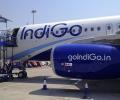
InterGlobe Aviation, the operator of India's leading airline IndiGo, delivered a better than expected performance across most parameters in Q2FY24. The company posted its fourth consecutive quarter of net profit of Rs 188 crore. It had reported a loss of Rs 1,583 crore in the same quarter a year ago.
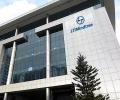
The stock of LTIMindtree finished at Rs 5,001 a piece on Monday, which means it is down about 5 per cent from its all-time high as its June quarter results for the 2023-24 financial year (Q1FY24) missed estimates. A cautious note by the management, coupled with the fact that it will miss its double digit revenue growth target for FY24 weighed on the stock price. The company delivered revenues of just over a billion dollars in the quarter with constant currency growth of 0.1 per cent.

Domestic stock markets would be driven by inflation numbers, global trends, and the last batch of Q4 earnings this week, analysts said. Markets will also react to industrial production data and consumer inflation numbers that were released after market hours on Friday. "Participants will react to macroeconomic data viz. IIP and CPI first, which were released post-market hours on Friday.
Weakness in HDFC Bank's net interest margin (NIM) might have bottomed out in the July-September quarter (Q2-FY24), analysts said on Tuesday, as most of the merger-related one-time adjustments have been done. The bank, they believe, should be able to grow from here on, allowing the stock to reverse its underperformance. "The weak NIM print was not unexpected given the merger and regulatory impact caused by the incremental cash reserve ratio (ICRR; 5-10 bps for the quarter).
